

About “reading the room” online… 😳
psa to Digital Marketers, read this!




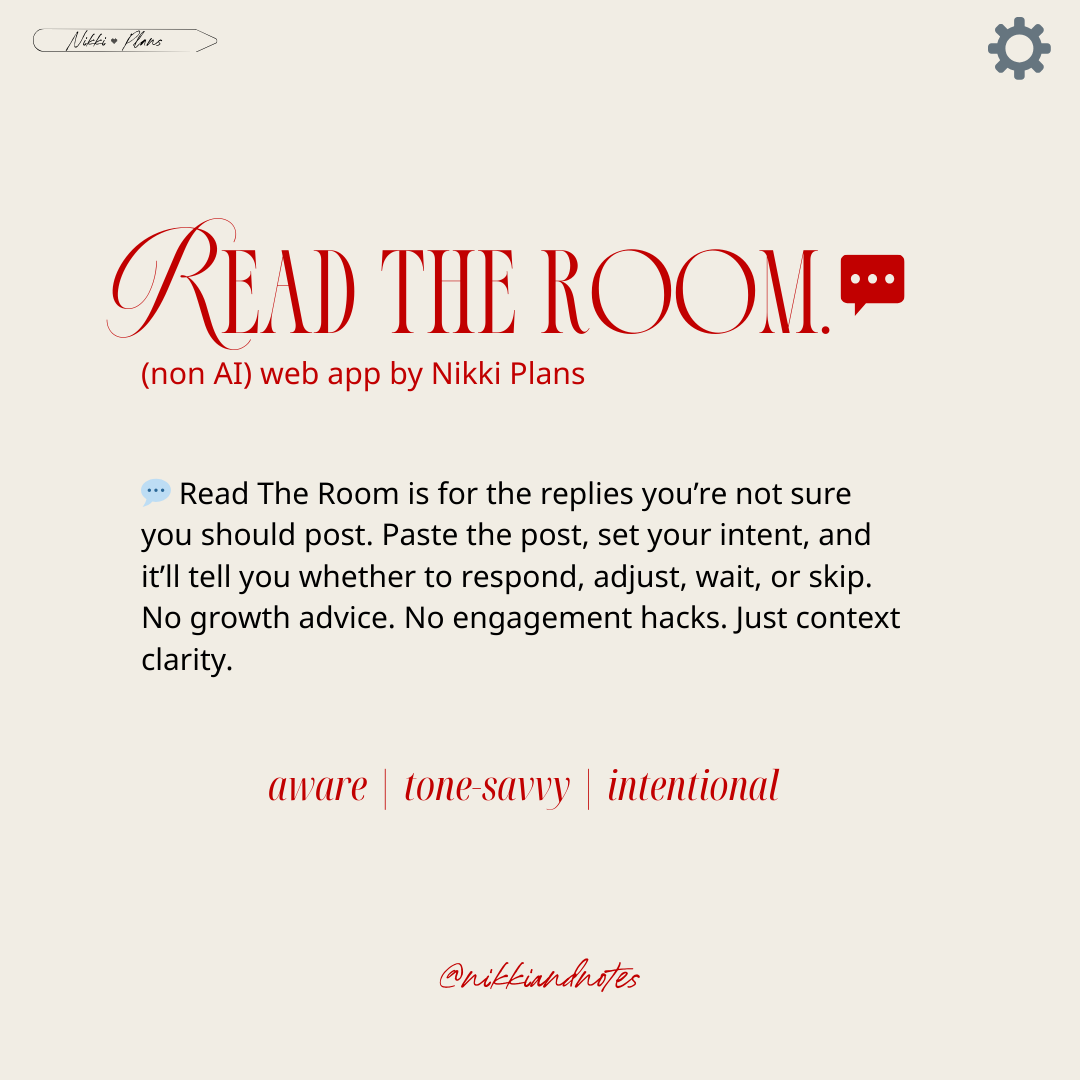
Do I have your attention now? Alright sis, lets talk. 👇
what neuroscience says about reading the room online: authority signaling vs relational intelligence
There are two skills that show up constantly online.
they are not the same.
1. authority signaling
Authority signaling is the reflex to demonstrate insight, provide strategy, offer advice, or reframe something into a solution. It is often well intentioned.
Many people are trained to believe that the fastest way to contribute is to provide value. So they do.
📌 Looks like:
- Offering solutions immediately
- Reframing emotion into strategy
- Giving frameworks
- Demonstrating expertise
Neurologically, this makes sense.
The human brain is wired for efficiency. When we encounter ambiguity or discomfort, the prefrontal cortex moves quickly into problem solving mode. It looks for patterns. It tries to restore order. This allows us to act quickly and feel competent.1
This is not always malicious. It is just fast, reflexive.
2. relational intelligence
Relational intelligence asks a different question.
“What is happening here?” before “What can I add?”
📌 It requires:
- Emotional labeling
- Perspective taking
- Pausing before responding
- Inhibiting the urge to fix
Empathy involves both emotional and cognitive systems.2 Research shows we must first recognize another person’s emotional state and then intentionally shift perspective.3 That reflective pause requires conscious regulation.4 It is not automatic.
Online spaces remove key cues.
No tone.
No facial expression.
No pacing.
When cues disappear, the brain fills gaps using habit.
And many habits are shaped by marketing culture:
📌 “Add value.”
“Demonstrate expertise.”
“Position yourself as authority.”
If someone learns marketing by mirroring others who default to optimization, that reflex becomes normalized. Every post becomes something to improve.
Relational intelligence asks:
Is this a strategy moment?
Or is this a human moment?
reading the room is cognitive regulation
From a neuroscience perspective, reading the room is not personality. It is regulation.
It is the ability to override the first impulse and run a second evaluation.
📌 Fast system reacts.
Slower system reflects.5
When slower processing is underused, fast reactions dominate.
This is why good intentions can still misfire.
When vulnerability is met with optimization, the issue is often sequencing. The advice may be valid. The timing may not be.
why the nervous system cares
Human brains constantly scan for safety.
“Am I safe here?”
When emotional acknowledgment is skipped, the nervous system registers distance. That subtle distance is what many people describe as “the ick.” It is misattunement, not moral failure.
Authority signaling has a place. Relational intelligence calibrates it.
emotional intelligence is trainable
Research shows emotional intelligence can be developed through practice and reflection.6 Executive regulation strengthens with repetition.
📌
- Pause before posting
- Ask: strategy or support?
- Separate usefulness from timing
That small pause builds stronger neural pathways for attunement.
The internet rewards authority performance. Human nervous systems respond to attunement.
You can do both. You just need calibration.
If you notice that your reflex is to optimize quickly, that is not a flaw. It is a fast neural pathway doing its job. But fast is not always aligned.
Sometimes a simple structured pause helps.
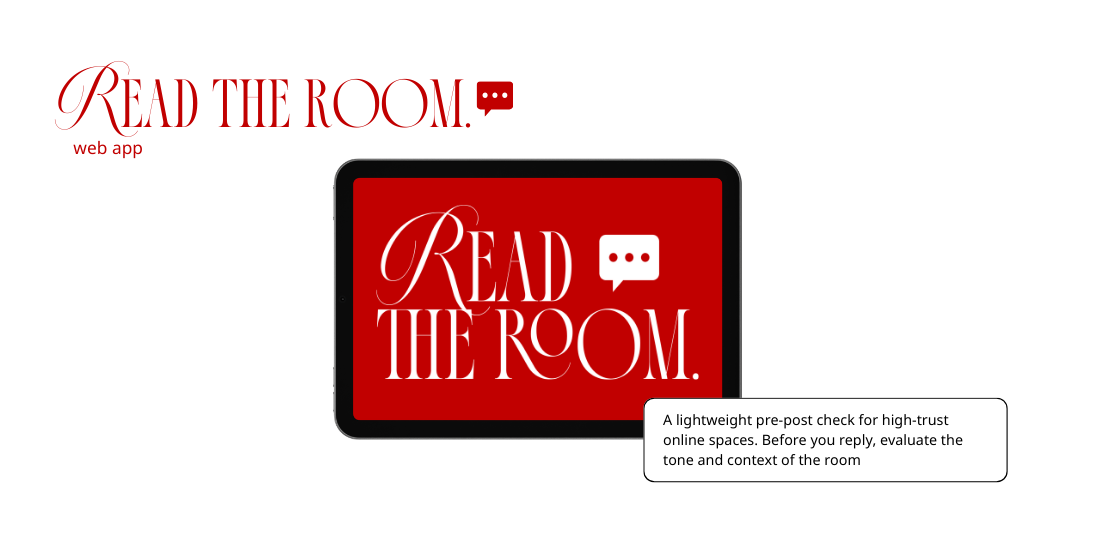
If this is something you struggle with, I built a small reflection tool that prompts context evaluation before you hit send. It is designed to strengthen that regulatory muscle, not shame it.
You do not want to give your audience the ick, do you?
references used
1. Salovey, P., & Mayer, J.D. “Emotional Intelligence.” Journal of Personality and Social Psychology, 1990. This foundational research hypothesizes that emotional intelligence contributes to the accurate appraisal and expression of emotion. ^7
2. Childers, E. et al. Unraveling the Neurobiology of Empathy and Compassion. National Academies Press Workshop, 2025. This workshop summary discusses the biological mechanisms of empathy and how they influence social interactions. ^8
3. Bernhardt, B.C., & Singer, T. “The Neural Basis of Empathy.” Social Neuroscience, 2012. This research explains the neural systems involved when we share or understand others’ feelings. ^9
4. Sara Saarni’s work on emotional competence outlines that emotional self-regulation requires awareness and control, not just perception of emotion. ^10
5. Research in emotional intelligence shows that emotional and cognitive components interact and that controlled cognitive processes support relational attunement. ^11
6. Filice, L. “Developing Emotional Intelligence.” MDPI, 2024. This article summarizes research showing emotional intelligence can be developed through practice and reflection. ^12
